


A Leap into the Unknown
Our little Coton de Tulear puppy is too scared to jump down from our low bed to the floor. She’s still small and hasn’t done it on her own yet. I know she’s capable of it. One day, I gently nudge her off the bed, and she lands safely on the floor with a little thud. Immediately, she wags her tail and trots off happily on her next adventure.

I remember when one of our sons learned to ride a bike. The time had come when, as a father, I realized his sense of balance had developed enough, and his courage might now be enough for him to ride without training wheels. He just hadn’t realized it himself yet. After dozens of words of encouragement, countless attempts, and running alongside him, it finally happened! In that moment, his confidence—and his territory—grew.
I once saw an image of an elephant tied to a post with a rather flimsy, thin metal chain. That fully grown elephant could have snapped the chain and freed itself at any moment.
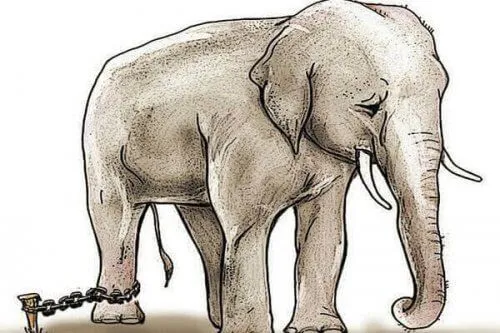
This elephant, however, had grown up chained since it was young, so it still believed it was a prisoner of the post. It had accepted its fate. This phenomenon is known as the Baby Elephant Syndrome.
What about our own courage?
Often, we too lack courage in life. Or self-confidence. Or someone to walk alongside us, to cheer us on: “Hey, you can do this!” Alone, we’re too often bound by old habits, distorted thought patterns, or the structures of our minds. A mental “record” keeps playing on repeat: “You’ll never be able to do this. This is way too big for you. You’re not like those other people who can accomplish anything!”
Yet, deep inside, there’s a suspicion—or rather, we know—that we’re capable of more, bigger, and better things. But… we need support to get there.
Life coaching can help move us forward in concrete ways when we’re stuck or facing challenging situations.
Sometimes, all we need is just a little more knowledge, self-awareness, self-efficacy, motivation, effective routines, clarity of thought, or some clever tips and tricks. And most often, practice.
Deeply ingrained neural pathways don’t change in just a few days. It takes a process of relearning. As new perspectives emerge, thought patterns begin to shift. We start learning a new normal. And in that moment—when we’ve learned to ride the bike—a whole new world opens up! When that chain is broken, a newfound freedom is discovered! Or when we’ve “jumped off the bed” for the first time, we realize that we’re capable of tackling other, similar challenges—and maybe even bigger ones! A new normal lies ahead!
As we step into this new (and amazing) normal, it’s important to track and evaluate progress with support from the very beginning. If you’ve been living on the brink of burnout, it’s crucial not to fall back into the exact same routines next week after a sudden “aha moment.” This isn’t just about avoiding symptoms; it’s about redefining and transforming habits and current mechanisms. Finding functional approaches to living in your new normal is essential—and you already have those tools! You just need to take them off your toolbelt and put them to use.
Sure, the internet is bursting with information, and AI can already spar us and teach us quite effectively. Yet, there are moments and stages in life when we need a person—a coach—to walk alongside us and support us through a significant life change. Technology can never replace the connection between people.
Why Not Take Advantage of Coaching?
I often wonder why so many people shy away from investing in coaching for life’s most important and far-reaching decisions, while at the same time spending much larger sums on upgrading the latest technology or funding their hobbies. Of course, those things bring benefits and joy—but I believe there’s far greater satisfaction in making wise career decisions, avoiding burnout, learning to navigate challenging relationships with greater sensitivity, improving work-life balance, and more.

As a coach, I don’t claim to be a guru or master teacher, but rather a guide—someone who can help illuminate the path and walk alongside you, challenging and encouraging you along the way.
The journey is yours to take on your own feet, but the chances of progressing effectively often multiply with the support of a good coach. If you feel that life coaching might benefit you right now, don’t hesitate to reach out! I’d be happy to share more and discuss a tailored coaching process designed just for you.
Thank you for taking the time to read this! I wish you courage as you step into the new year, 2025! – Valtteri
P.S. A tip for early 2025: Refer a friend to my coaching services, and you’ll both receive a 50% discount on your next session!
Why would anyone want to invest in life coaching?
Well, we readily invest time and money in a personal trainer, a physiotherapist, a dog-training program or music lessons. At the same time, we navigate through relationship challenges, burnouts, relocations, investments, and life-changing decisions – all without the guidance of a coach! We rely on a neighbor’s advice, a friend’s “kitchen psychology”, or our own existing thought-patterns. That’s not always the best way forward, though. To read more on this subject, go to my Life Coaching page here.
Elephant photo by Dennisland on Pinterest